en
 English
A vehicle's suspension system consists of an intricate assembly of parts that work together to deliver stability, precise handling, and a comfortable ride. Knowing the names and roles of these components is vital for keeping your car performing at its best and ensuring safety on the road. This guide explores the main suspension elements and explains what each one does in the overall system.
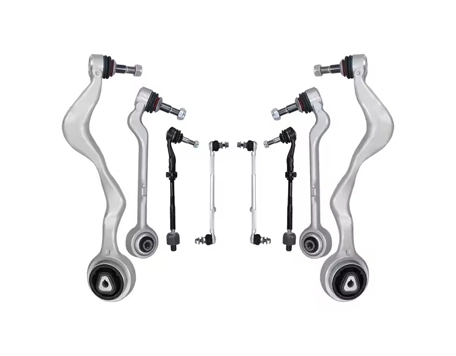
Control arms, sometimes called A-arms, link the wheel hub to the vehicle's frame, enabling controlled movement while enhancing stability. Most setups include both upper and lower control arms, with each contributing significantly to the suspension's effectiveness. The upper control arms generally manage alignment settings and attach the top of the wheel hub to the frame, helping preserve correct steering and suspension geometry. Meanwhile, the lower control arms support the majority of the vehicle's weight, connect the bottom of the wheel hub to the frame, absorb most road impacts, and deliver essential stability.
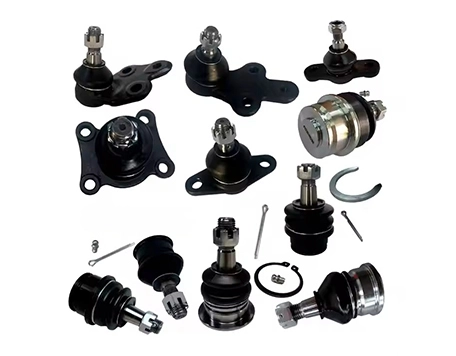
Ball joints serve as flexible pivot points that join the control arms to the steering knuckles. They allow smooth articulation and movement, which is fundamental for both steering response and suspension function. Lower ball joints bear the vehicle's load and permit vertical suspension travel, whereas upper ball joints often assist with alignment tweaks and enable the steering knuckle to pivot horizontally.
Springs bear the vehicle's weight, soak up road shocks, and help maintain consistent ride height. Different types are employed depending on the design. Coil springs are prevalent in contemporary vehicles due to their space-efficient shape, offering a refined ride and straightforward height adjustments. Leaf springs appear frequently in older cars and trucks, delivering a robust and straightforward approach renowned for durability and heavy-load capacity. Torsion bars, found in certain models, allow for ride height tuning and provide long-lasting, uncomplicated support.
Shock absorbers and struts mitigate the effects of uneven road surfaces to ensure a comfortable ride. They achieve this by transforming the kinetic energy from suspension movement into heat, which dissipates quickly. Standard shock absorbers pair with coil springs to regulate spring rebound and minimize bouncing. Struts, on the other hand, combine shock absorption with structural support, integrating the spring and damper into one assembly for comprehensive reinforcement and control.
Sway bars help minimize body roll when cornering by evenly distributing forces through the suspension. They link opposing wheels together, promoting balance and steadiness that enhance overall handling and passenger comfort during turns.
Steering knuckles bridge the suspension and steering systems, permitting the wheels to turn smoothly. They are integral to precise vehicle control and wheel alignment, guaranteeing that the wheels respond accurately to steering input.
Bushings are compact cushions made from rubber or polyurethane that dampen vibrations and reduce friction between metal components. Located throughout the suspension—including in control arms and sway bars—they effectively absorb impacts and isolate noise.
Tie rods belong to the steering assembly and connect the steering rack to the knuckles. They transfer driver input from the steering wheel directly to the wheels, facilitating turns while preserving alignment.
The axle links the wheels to the drivetrain, and constant velocity (CV) joints ensure seamless power delivery even as the suspension moves up and down. Together, they support reliable torque transfer and adaptable handling.
Control arms paired with ball joints create secure pivot points that guide wheel movement, preserving alignment and steadiness. Springs collaborate closely with shock absorbers or struts to cushion impacts and sustain ride quality for an enjoyable drive. Sway bars and bushings improve cornering stability by limiting lean and softening vibrations. Steering knuckles and tie rods deliver sharp, accurate directional control. Finally, axles and CV joints handle power distribution while accommodating suspension travel, ensuring uninterrupted performance and flexibility.
Routine checks and upkeep of suspension elements are crucial for peak vehicle operation and safety. Watch for warning signs like irregular tire wear, strange sounds, or degraded handling, and promptly replace any deteriorated parts with dependable replacements. Periodically verify wheel alignment, keep moving parts properly lubricated, and inspect for any damage or corrosion.
Grasping the names and purposes of suspension components is fundamental to safeguarding your vehicle's performance and safety. Consistent maintenance combined with high-quality replacements can significantly extend the lifespan of the entire system. For top-tier automotive components, trust Dpatking to provide the reliability and quality you need. If you require assistance or premium parts, contact us to explore how Dpatking can meet your automotive needs.