en
 English
The breakage of a control arm is a sudden and potentially hazardous occurrence that can arise from a variety of sources, including sudden impacts, insufficient maintenance, or gradual wear over time. Recognizing the potential triggers for control arm failure and staying alert to indicators of deterioration or damage is essential for maintaining road safety. A failed control arm can significantly impair a vehicle's steering capabilities, potentially resulting in reduced control and an increased chance of collisions. This discussion delves into the primary reasons behind control arm breakage, key warning signs to monitor, and practical steps drivers can implement to reduce associated risks.
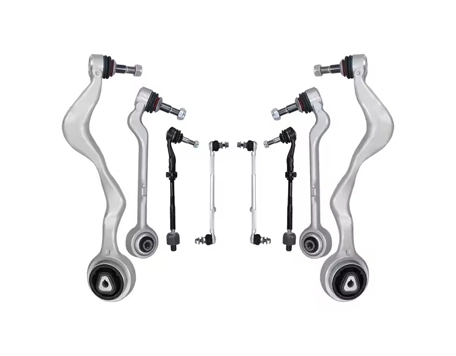
The control arm serves as a vital element in both the suspension and steering systems, though its specific configuration can differ based on the vehicle's design. Generally, it consists of upper and lower arms, along with ball joints and bushings. In certain vehicles equipped with independent front suspension, the control arm might also link to a stabilizer bar. In independent suspension setups common in contemporary automobiles, the control arm typically includes both an upper and lower arm. These components attach to the vehicle's chassis or body on one side and to the suspension unit on the other. To facilitate smooth operation and adaptability, ball joints and bushings are incorporated at the joining points, enabling rotational flexibility and multi-directional motion. Bushings, made from rubber or polyurethane, function as cushions that minimize friction between the control arm and adjacent suspension parts.
Identifying a compromised or broken control arm promptly is crucial to avoiding risks during operation. Several observable indicators can signal issues, with the following being among the most frequent. Vibrations felt through the steering wheel, often accompanied by challenges in maneuvering or turning the vehicle—especially during cornering—may stem from wheel misalignment causing excess play. Unusual knocking or squeaking noises from the suspension area, paired with a sense of instability while driving over rough surfaces or bumps, can also point to control arm damage. Additionally, irregular tire wear, particularly along the outer edges, is a reasonable sign of potential problems with the control arm. It is worth noting that these symptoms might alternatively result from issues with the attached ball joints or bushings.
A vehicle's safety and handling rely heavily on a properly functioning suspension system, where the control arm is essential for ensuring stability, precise control, and overall ride quality. Despite this, failures can occur with severe implications for both the vehicle and its passengers. Poor road surfaces, such as those that are potholed, uneven, or rugged, place extra demands on the control arms, leading to heightened stress, accelerated deterioration, and eventual failure. Over extended periods, exposure to harsh elements like moisture, corrosion, or material fatigue can progressively weaken the control arm, rendering it brittle and prone to snapping. Sudden collisions or impacts, whether from striking deep potholes, obstacles, or experiencing crashes (including lateral or frontal), impose tremendous forces that can directly damage or fracture the component. Neglecting routine upkeep, including inspections and proper lubrication of joints, hastens degradation and elevates failure risks. Though uncommon, inherent manufacturing flaws—such as substandard welds, flawed designs, or inferior materials—can predispose the control arm to breakage even in standard driving conditions.
The control arm plays an indispensable role in vehicle safety, handling, and passenger comfort by regulating and restricting the wheels' vertical motion. This function ensures consistent tire-to-road contact, promoting reliable stability and grip. It further enhances overall maneuverability and steadiness, acting similarly to a secondary damper by mitigating road shocks and vibrations for a smoother experience. Moreover, the control arm helps preserve proper wheel alignment in both vertical and horizontal planes, leading to improved steering accuracy, sharper turning response, and safer operation in general. Built to endure substantial stresses, it must remain robust against the demands of daily driving, including rapid acceleration, tight cornering, and abrupt stops.
The control arm works to reduce unnecessary bouncing, sideways shifting, and other erratic suspension behaviors. It preserves the suspension's intended geometry while keeping wheels properly aligned in vertical and horizontal orientations. By bearing significant weights and dynamic forces, it contributes to a comfortable and steady journey. In addition, it bolsters the long-term resilience of the entire suspension setup.