en
 English
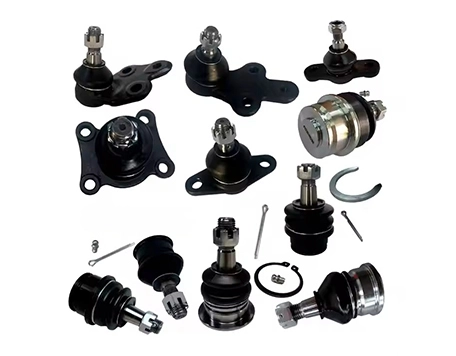
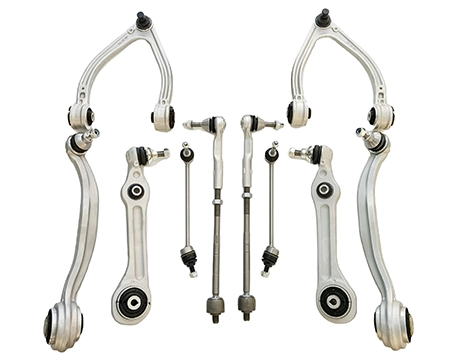
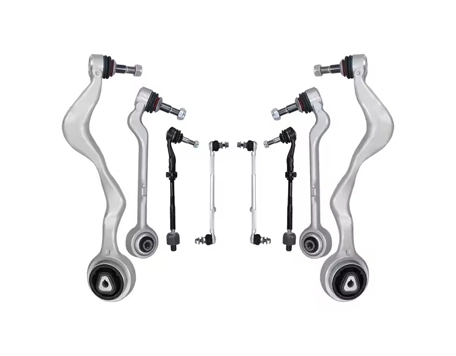
A control arm connects the chassis to the wheel suspension hub and is also known as an A-arm. These are the visible metal parts that link the chassis to the wheels in cars. Control arms play a crucial role in the suspension system by keeping the tires aligned with the vehicle's body. Their primary components include a bushing, a body, and a ball joint. Control arm bushings are the connections between the control arm and the vehicle frame. They play an important role in tire alignment and directly impact tire wear, handling, and overall driving performance. Most vehicles use one or two control arms per wheel on both the front and rear suspensions, with each arm typically accommodating two bushings.
A control arm connects the chassis to the wheel suspension hub and is sometimes called an A-arm. It consists of visible metal parts that link the chassis to the wheels. The control arm's body attaches to the vehicle frame using bushings, usually made of rubber, and connects to the suspension on the wheel side through a ball joint. Together, these components allow the wheels to rise and fall while staying connected to the road, enabling smooth and controlled movement during pivoting, turning, and driving. Control arms also help reduce steering friction and vibration.
Control arms can range from two to four in a typical automobile, depending on the vehicle's suspension design. However, in most modern cars, only the front wheel suspension is equipped with control arms, while trucks and larger vehicles often have rear axle control arms to assist in directing the vehicle. Properly functioning control arms and suspension system ensure that tires remain planted when encountering bumps or potholes. It may be time to replace the control arm assembly if vibrations occur in the steering wheel, directional control becomes difficult, or loud banging or clunking noises are heard over rough terrain.
Stamped steel, cast iron, and cast aluminum are common materials used for control arms, each offering its own advantages and drawbacks. Stamped steel control arms are cost-effective, providing good structural strength, rigidity, and durability with resistance to wear, corrosion, and road debris damage. However, they are heavier than cast aluminum options, which can increase vehicle weight and reduce fuel efficiency, and they offer limited design flexibility due to the manufacturing process, potentially restricting optimization of suspension geometry and performance.
Cast iron control arms provide excellent strength and stiffness, making them highly durable for heavy loads and harsh conditions, along with inherent vibration-damping properties that reduce noise and vibration in the cabin, as well as good heat resistance. On the downside, they are typically heavier than steel or aluminum alternatives, contributing to higher vehicle weight and lower fuel efficiency, and they are susceptible to corrosion without proper protection, requiring maintenance and coatings.
Cast aluminum control arms are lightweight, offering significant weight savings that improve vehicle performance and fuel efficiency, with greater design flexibility for intricate and optimized shapes that enhance suspension geometry. They also provide natural corrosion resistance without needing extra coatings. However, they are generally more expensive to produce and may not match the strength of steel or iron in heavy-duty or high-stress applications.
Control arm bushings feature an external metal casing, a rubber component, and an inner metal jacket. They connect the car body to the knuckle or wheel hub, allow the wheels to turn and move up and down, and help control and stabilize the wheels. Control arms are essential for maintaining vehicle stability and providing precise steering control, contributing to safer and more comfortable driving. They absorb impacts and vibrations from the road, improving overall ride quality and reducing tire wear. A control arm bushing reduces vibration between the frame and wheels while aligning the arm, resulting in a smoother ride with lower vibration levels.
Bushings in the suspension's control arms significantly enhance ride quality and maneuverability by absorbing impacts, softening the suspension's response to road irregularities, and reducing road noise and vibrations. They are flexible, allowing bending and movement in any direction without becoming loose or failing to return to their original shape and position. Bushings are employed in numerous suspension and steering joints to prevent vibration and friction between components. Parts such as the control arm, suspension mount, stabilizer bar, stabilizer link, transmission, engine mounts, and various chassis and steering elements rely on bushings.
Bushings function similarly to cartilage in human joints: when cartilage wears out, bones rub together causing pain, and similarly, damaged bushings allow metal parts to rub, leading to uneven tire wear, discomfort, noise, and vibrations. Factors like temperature, age, exposure, heavy loads, water, oils, and frequent movement all accelerate bushing deterioration.
The control arm, also known as the suspension arm, is a key component of a car's suspension system. Typically, there are two control arms on each front wheel and one or two on each rear wheel, depending on the suspension type. The arms connect to the car's body at one end and to the wheel hub or bushing at the other, where the hub holds the wheel in position and allows it to spin freely. The exact placement of control arms varies by suspension design, but they are generally located at the center of the wheel and extend toward the front and rear of the car, distinguishing between upper and lower control arms.