en
 English
As a trusted supplier of auto parts, including control arms, ball joints, and bushings, Dpatking explains how to determine which part needs replacement, what signs to watch for, and when it's best to replace both together. In the world of vehicle suspension maintenance, one of the most common questions is whether a driver needs to replace the entire control arm or simply the ball joint. Both parts play a vital role in steering, suspension geometry, and overall safety, but they wear differently, and their replacement strategies may not always be the same.
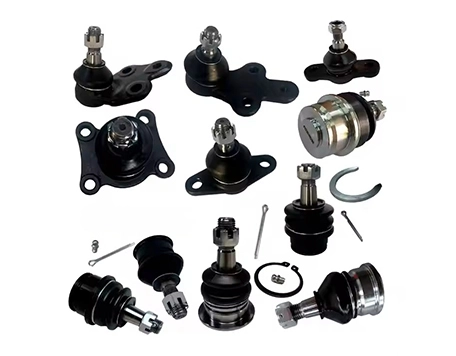
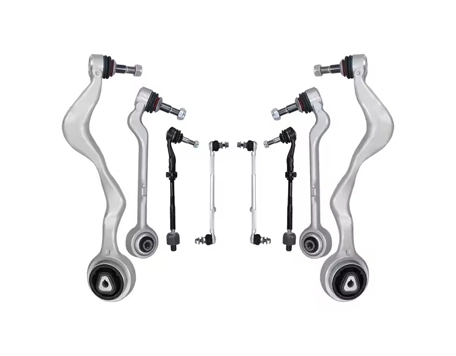
Before deciding on replacement timing, it's essential to understand the function of each part. The control arm serves as a suspension link between the vehicle frame and the wheel hub, allowing vertical motion while maintaining wheel alignment. The ball joint provides a pivoting connection between the control arm and the steering knuckle, enabling the wheels to steer and move with the suspension. Bushings are rubber or polyurethane inserts that cushion the control arm, helping to reduce noise and vibration. In many vehicles, the ball joint is pressed or bolted onto the control arm, allowing it to be replaced separately, while in others, they form a fixed assembly that must be replaced together.
Ball joints often show wear first in the assembly, particularly in vehicles driven on uneven roads or with high mileage. Key symptoms include clunking or knocking sounds when turning or going over bumps, loose or wandering steering, uneven tire wear on the inside or outside edges, and visible damage to the ball joint boot, such as cracks, tears, or leaking grease. If the control arm and bushings remain in good condition, replacing just the ball joint can be a cost-effective and safe choice, provided the vehicle's suspension design permits separate replacement. Always inspect the mounting area to ensure the new ball joint can be securely fitted; if there's excessive rust or deformation, a full control arm replacement might still be required.
In certain cases, replacing only the ball joint isn't sufficient. Consider replacing the entire control arm if the bushing is worn or cracked, if the control arm itself is bent, rusted, or damaged, if the ball joint isn't serviceable separately (such as in riveted or integrated designs), or if steering instability persists after ball joint replacement. Many technicians suggest replacing the whole control arm in vehicles with over 100,000 km (or 60,000 miles), especially when already addressing the ball joint, due to significant overlap in labor.
Replacing the ball joint and control arm together provides several benefits. It restores full suspension integrity, as worn bushings and ball joints frequently degrade at the same time. It also reduces overall labor time and cost since one installation handles both parts, while improving ride quality and alignment as the new components work together optimally. This approach is particularly recommended for fleet vehicles, commercial applications, or high-mileage sedans and trucks.
To decide which part to replace, evaluate the specific conditions: if only the ball joint is worn and the arm is in good shape, or if budget is tight with limited damage, replacing the ball joint alone is often appropriate. However, if the control arm bushing is cracked or dry, the ball joint is non-removable, or both parts show age or corrosion, replacing the control arm or both is advisable. In cases where the control arm bushing issue exists or both components are affected, replacing both is typically the best option. If still unsure, consult a professional technician or a trusted auto parts supplier.
Dpatking supplies high-quality auto parts, including ball joints, control arms, and bushings, designed to meet or exceed OEM performance standards. Whether replacing one component or rebuilding the entire suspension system, they offer durable parts engineered for strength and stability, product ranges for Japanese, Korean, American, and European vehicles, flexible order quantities for wholesalers and distributors, and reliable customer support for technical questions and fitment. With Dpatking, you get parts you can trust without guesswork.
Knowing when to replace just the ball joint or the entire control arm can save money, enhance safety, and prevent future suspension issues. If the vehicle design allows it and the control arm is still in good condition, replacing the ball joint alone is often sufficient. However, if other wear is evident or the parts are integrated, opting to replace both may prove the smarter long-term choice.